Leading Lines
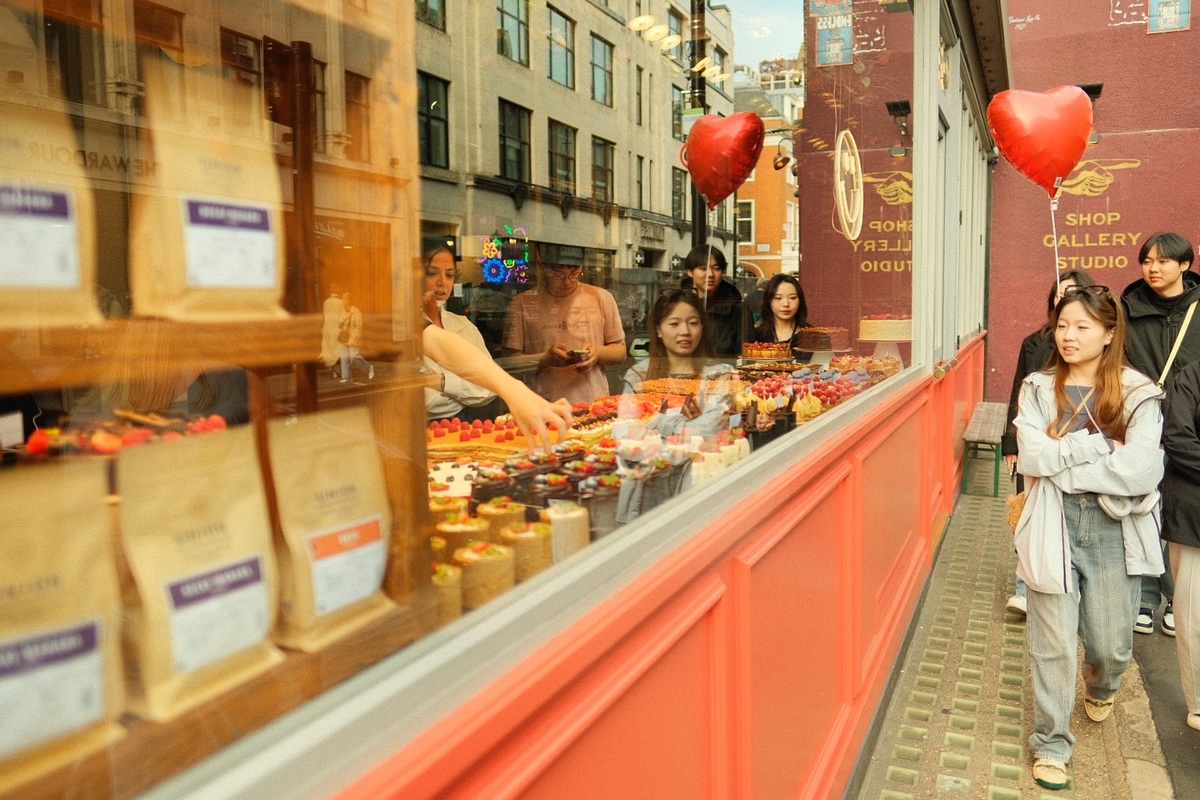
Photo: lukes.photos
Streets are full of lines — pavements, railings, lamp posts, road markings, kerbs, shopfronts, shadows. The job is to use them deliberately. A line that leads the eye towards your subject makes the viewer work harder and stay longer in the frame.
Converging lines are the most powerful: two parallel lines (a road, a colonnade, a row of bollards) appear to meet at a point. Put something interesting at that point.
Lines don't have to be straight. Curved roads, river embankments, staircases — all create flow through the frame. The question is always: where does this line take the eye, and what is there when it arrives?
Watch for: lines that lead out of the frame rather than into it. A line pointing to the bottom-left corner is usually a mistake. Lines that divide the frame in half without purpose — they compete with your subject rather than serve it.
The point: leading lines are compositional architecture. You're not just pointing a camera at a subject, you're building a path for the viewer to follow.
Any. Wide angles (28–35mm) exaggerate converging lines. Try low angles to amplify the effect.
Find three different types of leading line — road, shadow, and architectural — and build a composition around each. One hour.
Why lines steer the eye
A viewer's eye does not scan a photograph randomly — it enters, travels, and either finds something worth arriving at or leaves. Lines are the strongest steering mechanism a frame has: the eye locks onto an edge and rides it. Composition with leading lines is simply taking control of that ride.
This is why the same busy street can produce a chaotic frame or an ordered one from two positions a metre apart. The difference is whether the lines in the scene — kerbs, railings, shadows, shopfronts — happen to aim at your subject or away from it. The photographer's job is not to find special streets. It is to stand where the ordinary lines organise.
A working taxonomy
Converging parallels are the power tool. A road, a colonnade, a bridge, a row of bollards: parallel lines appear to meet at a vanishing point, and whatever sits at that point receives every glance the picture gets. The classic street move is to find the convergence, then wait for a subject to walk into it.
Curves move the eye slowly — a bending road or a sweep of railway arches gives a frame rhythm and keeps the viewer inside it longer than a straight line would.
Diagonals inject energy. A shadow cutting corner-to-corner or a stair rail slicing the frame feels dynamic where horizontals and verticals feel stable and calm.
Implied lines are the subtle ones: a person's gaze, a pointing arm, a row of faces all turned the same way. The eye follows where people look as reliably as it follows any kerb. A subject staring out of frame drags the viewer out with them — which is why eyelines into the frame matter as much as physical lines.
The discipline of the arrival point
The question that separates decorative lines from working ones: *where does this line take the eye, and what is there when it arrives?* A magnificent convergence that delivers the viewer to an empty pavement is a picture about nothing, efficiently told.
So work in that order. Find the line structure first — this is the part you can do slowly, on an empty street, in the morning. Frame it. Then wait for the arrival point to be occupied: the pedestrian reaching the vanishing point, the cyclist crossing the diagonal. Photographers call it fishing — the composition is the rod, the subject takes the bait.
The leaks to check before you press: lines that exit the frame corners (they escort the eye out of the picture), lines that split the frame in half without purpose (two competing pictures, neither wins), and bright edges along the border — brightness is itself a draw, and a hot sky at the frame edge beats your carefully aimed kerb every time.
Field Questions
What are leading lines in photography?
Lines within a scene — roads, railings, shadows, kerbs, even a person's gaze — that direct the viewer's eye through the frame towards the subject. They turn the order in which a photograph is looked at into a deliberate choice.
How do I find leading lines on an ordinary street?
Lower your eye level and look for edges rather than objects: kerb lines, wall shadows, painted road markings, railings, shop awnings. Then move until those edges aim at a single point, and wait for a subject to occupy it.
What is the most common leading lines mistake?
A strong line that arrives nowhere. Convergence with an empty vanishing point is composition without content — build the frame first, then wait until something worth arriving at fills the point where the lines meet.